top of page
Alkrington
Insoles and orthotics
The right insole can take pressure off a painful area, support a tired arch or change the way the foot moves. We look at your feet, your shoes and how you stand and walk before recommending anything.
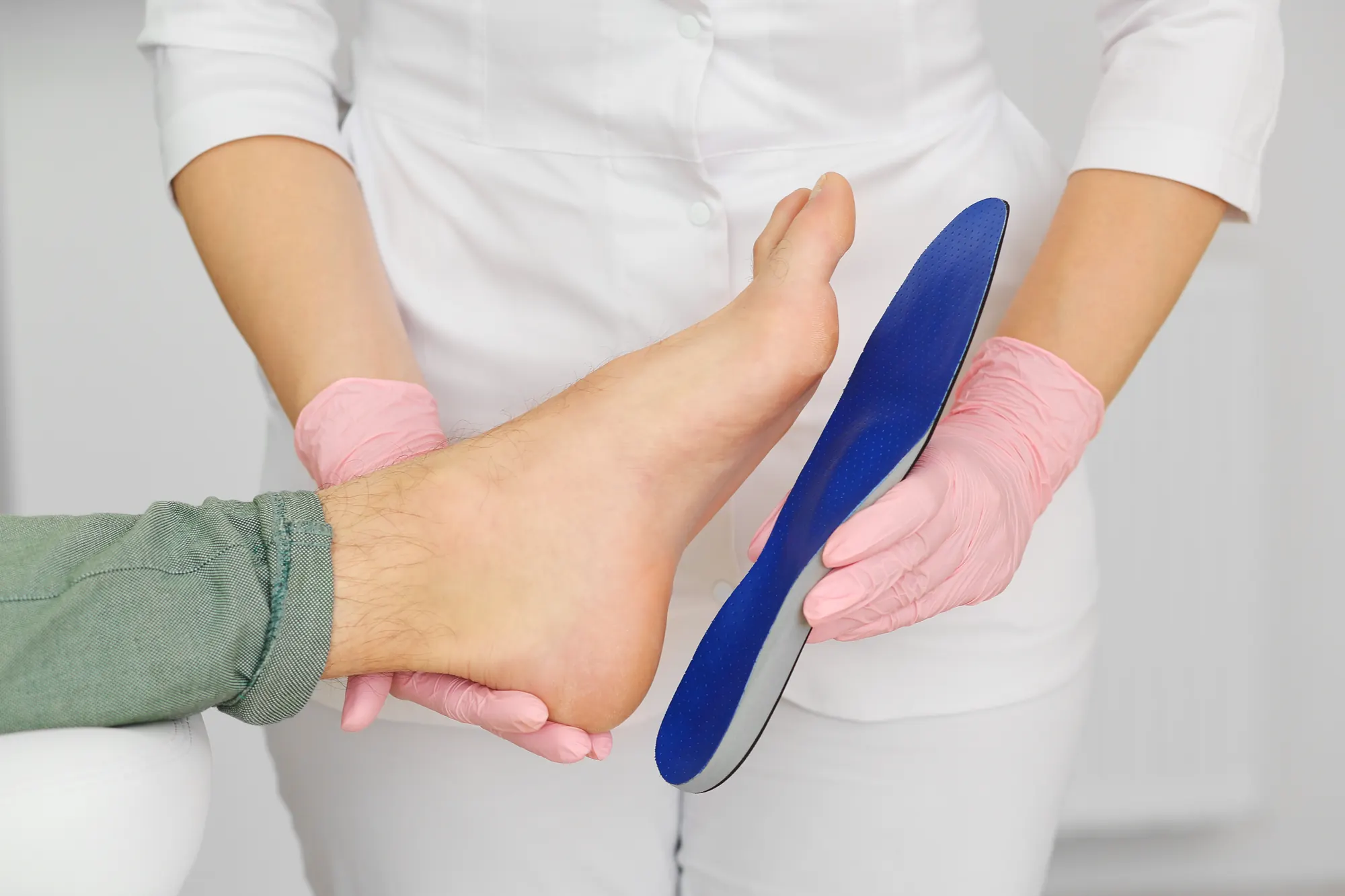
What insoles can help with
Common reasons people come to us
- Heel pain Including plantar heel pain (often called plantar fasciitis), worst in the first steps of the morning.
- Arch pain and flat feet Feet that ache after standing or walking for a while.
- Pain under the ball of the foot A burning or bruised feeling under the toes.
- Corns and callus that keep returning Where the way you walk concentrates pressure in one spot.
The assessment
Looking at the whole picture
- Your story Where it hurts, when it started, what makes it better or worse, and what you’d like to get back to doing.
- Your feet and legs How your joints move, how you stand, and how your feet behave when you walk.
- Your shoes Bring the ones you wear most. Wear patterns tell us a lot, and an insole has to fit the shoe it will live in.
- A plan Insoles where they’ll help, plus stretches, footwear advice and anything else that will make a difference.
Prices
What it costs
If you need to change or cancel, please give us at least 24 hours’ notice. Missed appointments and later cancellations are charged £25.
Insoles and orthotics
- £50 Assessment (About 45 minutes)
- Ask us Insoles (Depends on the type you need)
Foot conditions
Conditions we treat this way
Symptoms, what you can do yourself, and when to get help.
- Bunions A bony lump at the side of the big toe joint that can rub and ache.
- Flat feet Low or fallen arches, which only need treatment if they cause pain.
- Heel pain Pain under the heel, often worst with the first steps in the morning.
- Pain in the ball of the foot Burning or aching under the toes, known as metatarsalgia.
FAQs
Questions about insoles and orthotics
Will insoles fit in all my shoes?
Most insoles need a shoe with a removable footbed and a fastening, such as laces or a strap. Slim fashion shoes and slippers rarely work; we’ll advise on what will.
How long until they help?
Give your feet a couple of weeks to get used to them, building up the time you wear them each day. We’ll check how you’re getting on.
Podiatry
bottom of page