Alkrington
Ingrown toenails
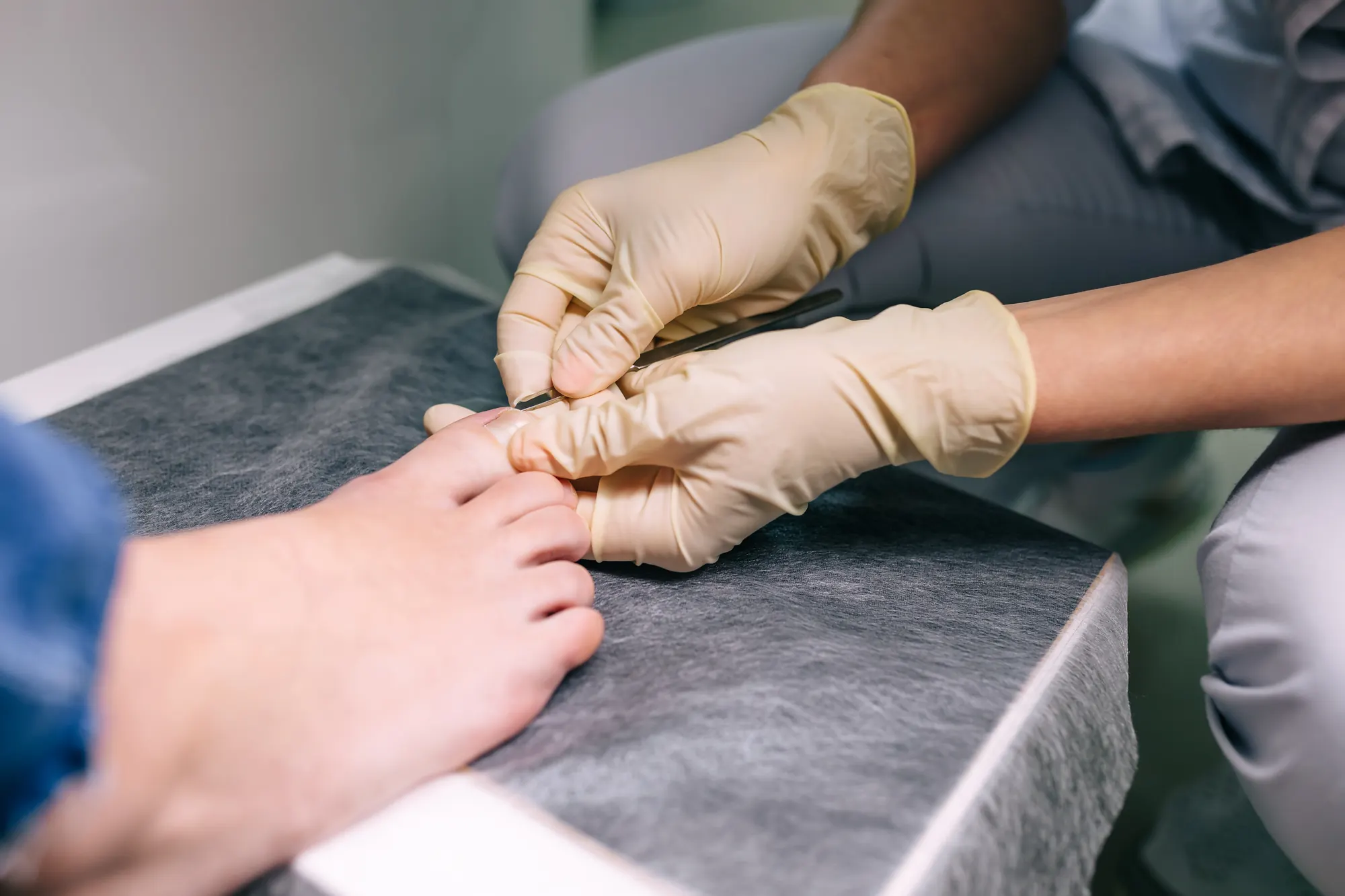
A nail edge growing into the skin is painful, and it easily becomes infected. It’s one of the most common problems we treat, and we can help at every stage: careful clearing of the nail edge, nail bracing without surgery, or permanent correction under local anaesthetic.
Signs
How to tell it’s ingrowing
- Pain along the side of the nail Often worse in shoes, or when something presses on the toe.
- Redness and swelling The skin beside the nail looks puffy and feels tender or warm.
- Infection Pus, bleeding, or soft, red overgrown tissue at the nail edge.
Treatment
Three ways we can treat it
Clearing the nail edge
We remove the spike of nail that’s digging in and clean the groove beside it. For many people that brings relief the same day, and with good nail care it doesn’t come back.
Onyfix nail correction
A thin composite brace is bonded to the surface of the nail. As the nail grows, the brace gently lifts and guides it into a flatter shape. No injections, no cutting and no time off; suited to curved nails that keep pressing in.
Nail surgery
When the problem keeps coming back, we remove the ingrowing edge (or occasionally the whole nail) under local anaesthetic and treat the root so that part doesn’t grow again.
Why it happens
Usually nail shape, cutting or shoes
Some nails are naturally curved and press into the skin as they grow. Others start ingrowing after being cut too short or rounded off at the corners, after an injury, or from tight shoes and sweaty feet. Teenagers are particularly prone to them.
Cutting down the side of the nail at home tends to make things worse. It usually leaves a small spike of nail under the skin, which is the most common reason the problem returns. Cut straight across, not too short, and let us deal with an edge that’s already digging in.
When not to wait
If redness is spreading up the toe or foot, you feel feverish or unwell, or you have diabetes or poor circulation and the toe looks infected, get advice the same day from your GP or NHS 111.
Prices
What it costs
If you need to change or cancel, please give us at least 24 hours’ notice. Missed appointments and later cancellations are charged £25.
Ingrown toenails
- £50 Assessment and treatment (Clearing the nail edge, about 45 minutes)
- Ask us Onyfix nail correction (Priced after assessment)
- From £350 Nail surgery (Includes two dressing appointments)
Foot conditions
Conditions we treat this way
Symptoms, what you can do yourself, and when to get help.
- Ingrown toenail A nail edge growing into the skin, causing pain, redness and swelling.
FAQs
Questions about ingrown toenails
Will I need nail surgery?
Not necessarily. Many ingrown toenails settle with careful treatment of the nail edge and better nail care. We suggest surgery when the problem keeps coming back or the nail’s shape means it will.
Is Onyfix painful?
Applying the brace is painless: it’s bonded to the top of the nail, with no injections. It needs replacing as the nail grows out, so it’s a course of appointments rather than a single visit.
Can children be treated?
Yes. Ingrown toenails are common in children and teenagers, and a parent or guardian should come with anyone under 16.