top of page
Alkrington
Verruca
Verrucas are warts on the feet, caused by the human papillomavirus (HPV). They’re harmless and many go away on their own, although this can take months or even years.
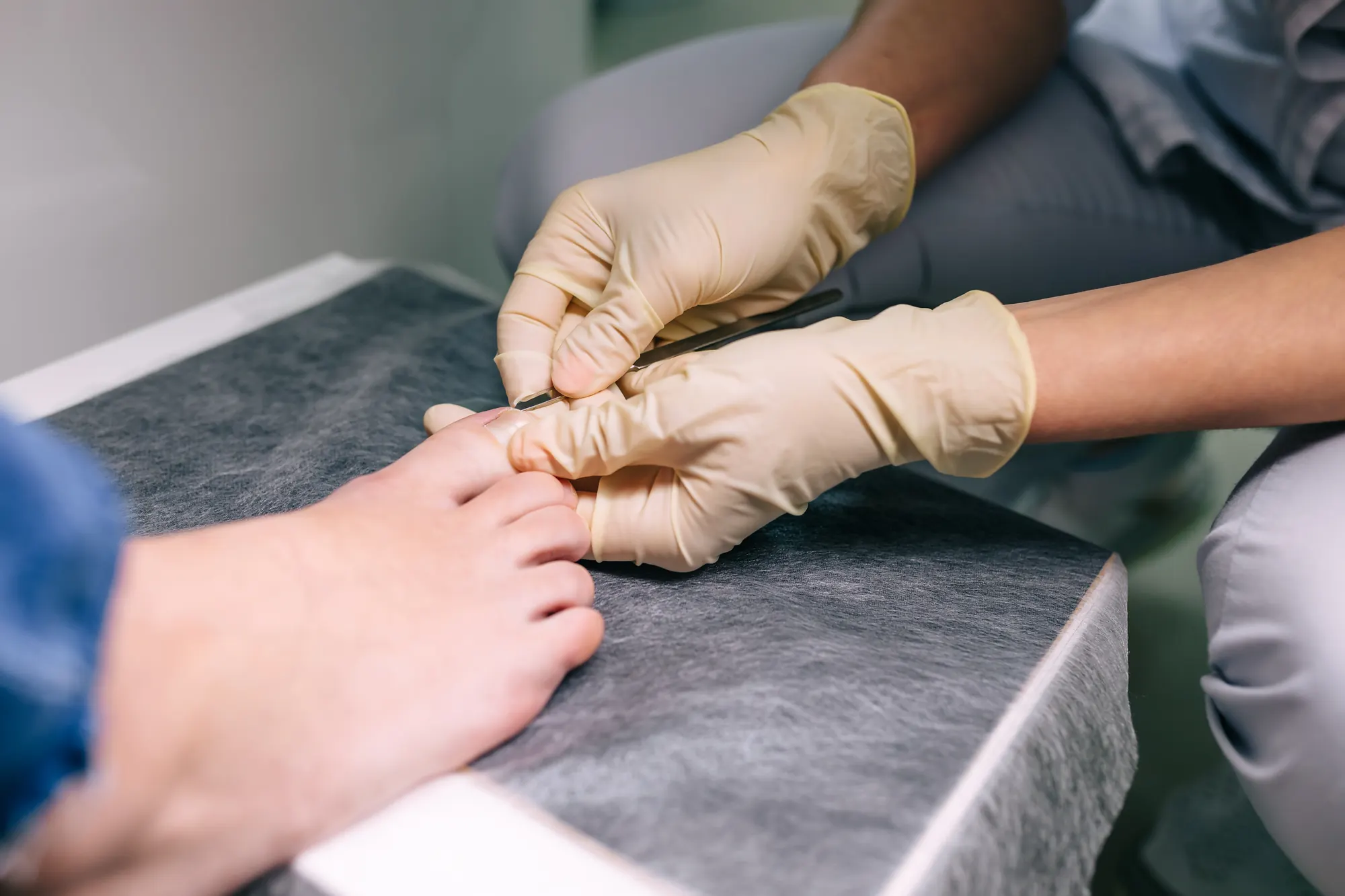
Check if you have a verruca
- A flat, rough patch on the sole or toes, often with tiny black dots
- Pain when the verruca is squeezed from the sides
- Several small verrucas grouped together
Things you can do yourself
Do
- Cover the verruca with a waterproof plaster or verruca sock when swimming
- Change your socks every day
- Try a pharmacy treatment if it’s bothering you
Don’t
- Share towels, socks or shoes
- Pick or scratch the verruca
- Use pharmacy treatments if you have diabetes or poor circulation without advice
Non-urgent advice: See a podiatrist if:
- it is painful or spreading
- pharmacy treatment hasn’t worked
- you’re not sure if it’s a verruca or a corn
- you have diabetes or poor circulation
See your GP if a growth on your foot bleeds, changes in appearance or grows quickly.
How we can help
We confirm it’s a verruca, reduce the hard skin over it to ease the pain, and treat it, including with Verrutop, which is painless and needs no dressings.
Foot conditions
Related conditions
- Athlete’s foot An itchy, flaky fungal rash, usually between the toes.
- Corns and calluses Hard, thickened skin where shoes or walking put pressure on the foot.
- Cracked heels Dry, thick skin around the heels that splits and can bleed.
Podiatry
bottom of page