top of page
Alkrington
Ingrown toenail
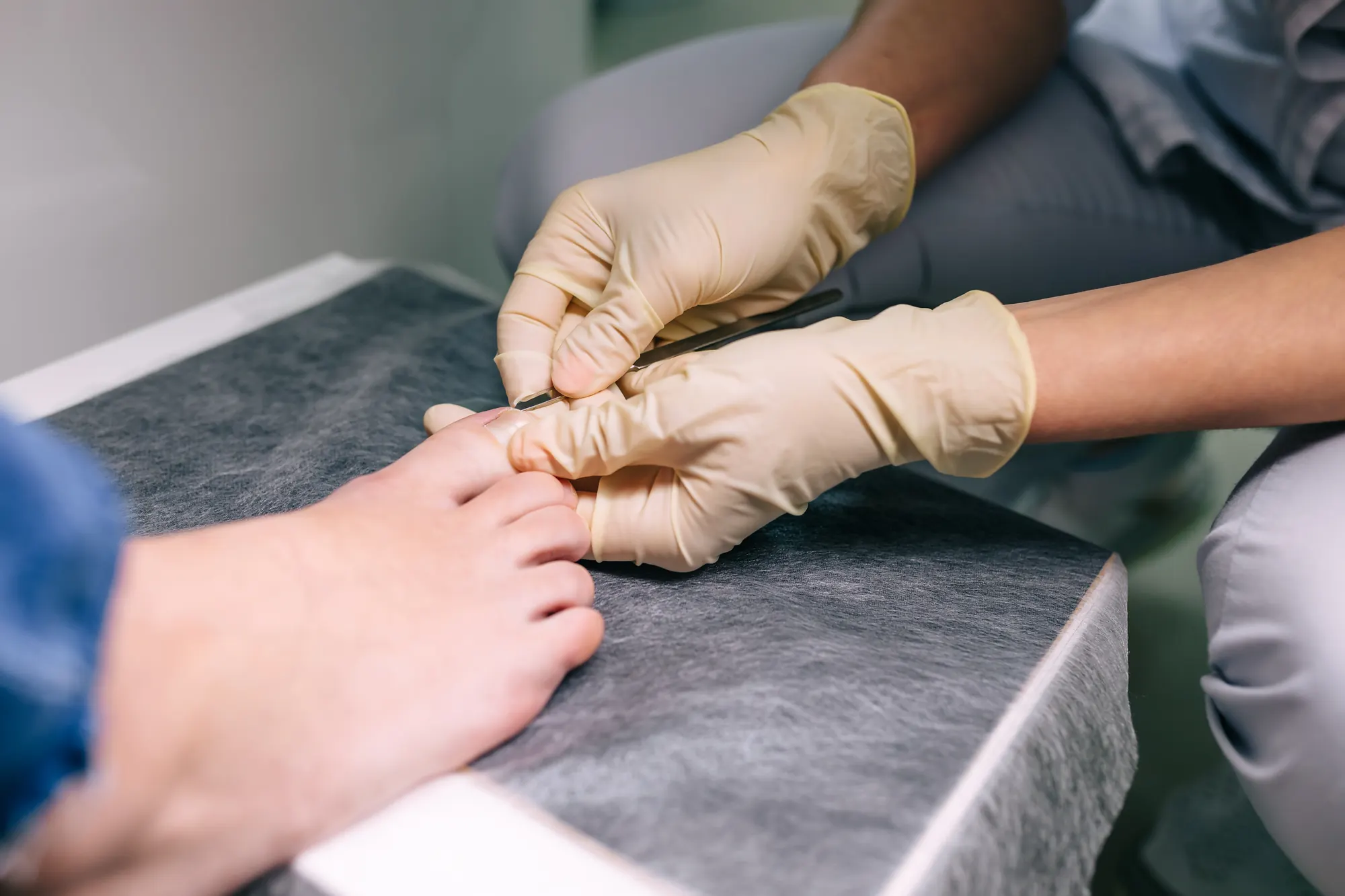
An ingrown toenail happens when the side of the nail grows into the skin around it. It most often affects the big toe and is common in teenagers and young adults.
Check if you have an ingrown toenail
- Pain along the edge of the toenail
- Red, swollen skin beside the nail
- Pus, bleeding or soft, red overgrown skin at the nail edge
Things you can do yourself
Do
- Soak your foot in warm water for 10 to 15 minutes, three times a day, to soften the skin
- Keep your feet clean and dry
- Wear wide, comfortable shoes or sandals
- Take paracetamol or ibuprofen for pain if you need to
Don’t
- Cut down the side of the nail or try to dig it out
- Cut toenails too short or round off the corners
- Wear tight or pointed shoes
Non-urgent advice: See a podiatrist if:
- the toe is very painful or has pus
- it hasn’t improved after a few days of looking after it yourself
- it keeps coming back
- you have diabetes
Urgent advice: Ask for an urgent GP appointment or get help from NHS 111 if:
- the redness is spreading up the toe or foot
- you have a high temperature or feel hot and shivery
- you have diabetes and the toe looks infected
You can call 111 or get help online at 111.nhs.uk. In an emergency, call 999.
How we can help
We remove the spike of nail that’s digging in, often bringing relief the same day. If the problem keeps returning, we offer Onyfix nail correction or permanent nail surgery under local anaesthetic.
Foot conditions
Related conditions
- Thickened toenails Hard, overgrown nails that are difficult to cut and press in shoes.
- Fungal nail infection Thick, discoloured or crumbly toenails caused by a fungus.
- Diabetes and your feet Why foot checks matter and the warning signs not to ignore.
Podiatry
bottom of page