top of page
Alkrington
Diabetes and your feet
Diabetes can reduce the feeling and the blood supply in your feet. That means a small cut, blister or corn can go unnoticed and heal slowly. Regular checks and good daily care prevent most serious problems.
Signs your feet need attention
- Numbness, tingling or a burning feeling in the feet
- Cold feet, or feet that change colour
- Cuts or blisters that heal slowly
- Dry, cracked skin, hard skin or thickened nails
Things you can do yourself
Do
- Check your feet every day, using a mirror or asking someone to help
- Wash and dry your feet carefully, especially between the toes
- Wear well-fitting shoes and check inside them before putting them on
- Have your feet checked at least once a year, more often if you’re told your risk is higher
Don’t
- Walk barefoot, even at home
- Use corn plasters or cut corns and hard skin yourself
- Put your feet on radiators or use hot water bottles on them
Non-urgent advice: See a podiatrist if:
- you have hard skin, corns or nails you can’t manage safely
- you notice changes in feeling, colour or temperature
- you haven’t had a foot check in the last year
Urgent advice: Ask for an urgent GP appointment or get help from NHS 111 if:
- you have a new wound, blister or ulcer that isn’t healing
- part of your foot is red, hot, swollen or painful
- the colour of your foot or toes has changed
- you feel unwell with a foot problem
You can call 111 or get help online at 111.nhs.uk. In an emergency, call 999.
How we can help
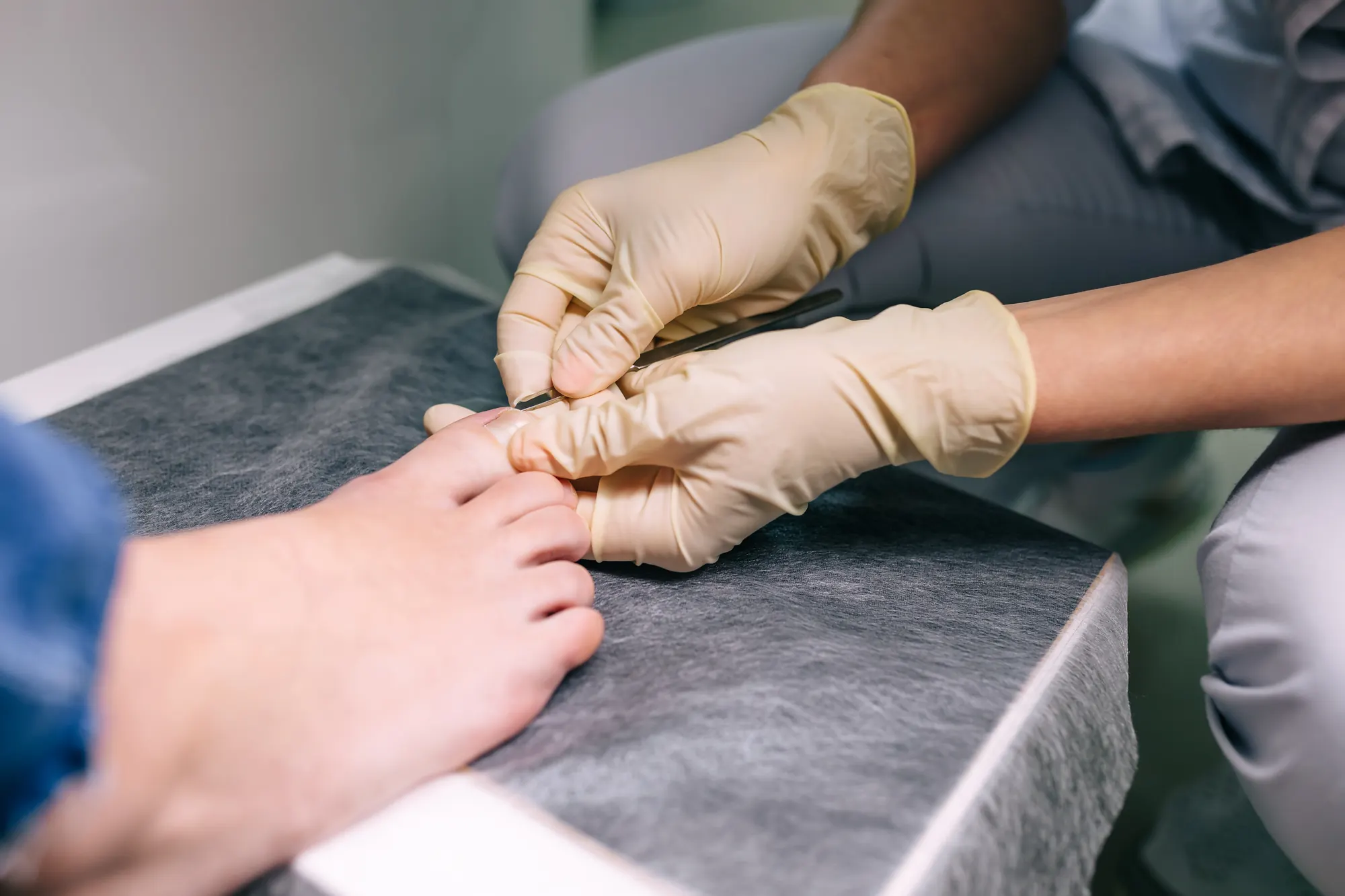
Every routine appointment includes a check of the skin, circulation and feeling in your feet, as well as safe care of nails, hard skin and corns. We’ll tell you how often to come back and what to watch for.
Foot conditions
Related conditions
- Corns and calluses Hard, thickened skin where shoes or walking put pressure on the foot.
- Thickened toenails Hard, overgrown nails that are difficult to cut and press in shoes.
- Cracked heels Dry, thick skin around the heels that splits and can bleed.
Podiatry
bottom of page