top of page
Alkrington
Athlete’s foot
Athlete’s foot is a common fungal infection of the skin. It isn’t serious, but it can keep coming back and it can spread to the toenails if it isn’t treated.
Check if you have athlete’s foot
- Itchy white patches between the toes
- Red, sore, flaky or cracked skin on the feet
- Skin that peels, or small blisters on the soles or sides of the feet
- On darker skin, the rash can look grey or white rather than red
Things you can do yourself
Do
- Dry your feet carefully after washing, especially between the toes
- Use a separate towel for your feet and wash it often
- Wear cotton socks and change them every day
- Use an antifungal cream, spray or powder from a pharmacy, and keep using it for as long as the pack says
Don’t
- Scratch the rash, as it can spread
- Walk barefoot in communal changing rooms or showers
- Wear the same shoes two days running if you can avoid it
Non-urgent advice: See a podiatrist if:
- pharmacy treatment hasn’t worked after 2 weeks
- it keeps coming back
- you have diabetes
- your toenails are starting to thicken or discolour
Urgent advice: Ask for an urgent GP appointment or get help from NHS 111 if:
- the skin is hot, red and swollen and the redness is spreading
- you have diabetes and the skin has broken down or looks infected
- you feel hot and shivery or generally unwell
You can call 111 or get help online at 111.nhs.uk. In an emergency, call 999.
How we can help
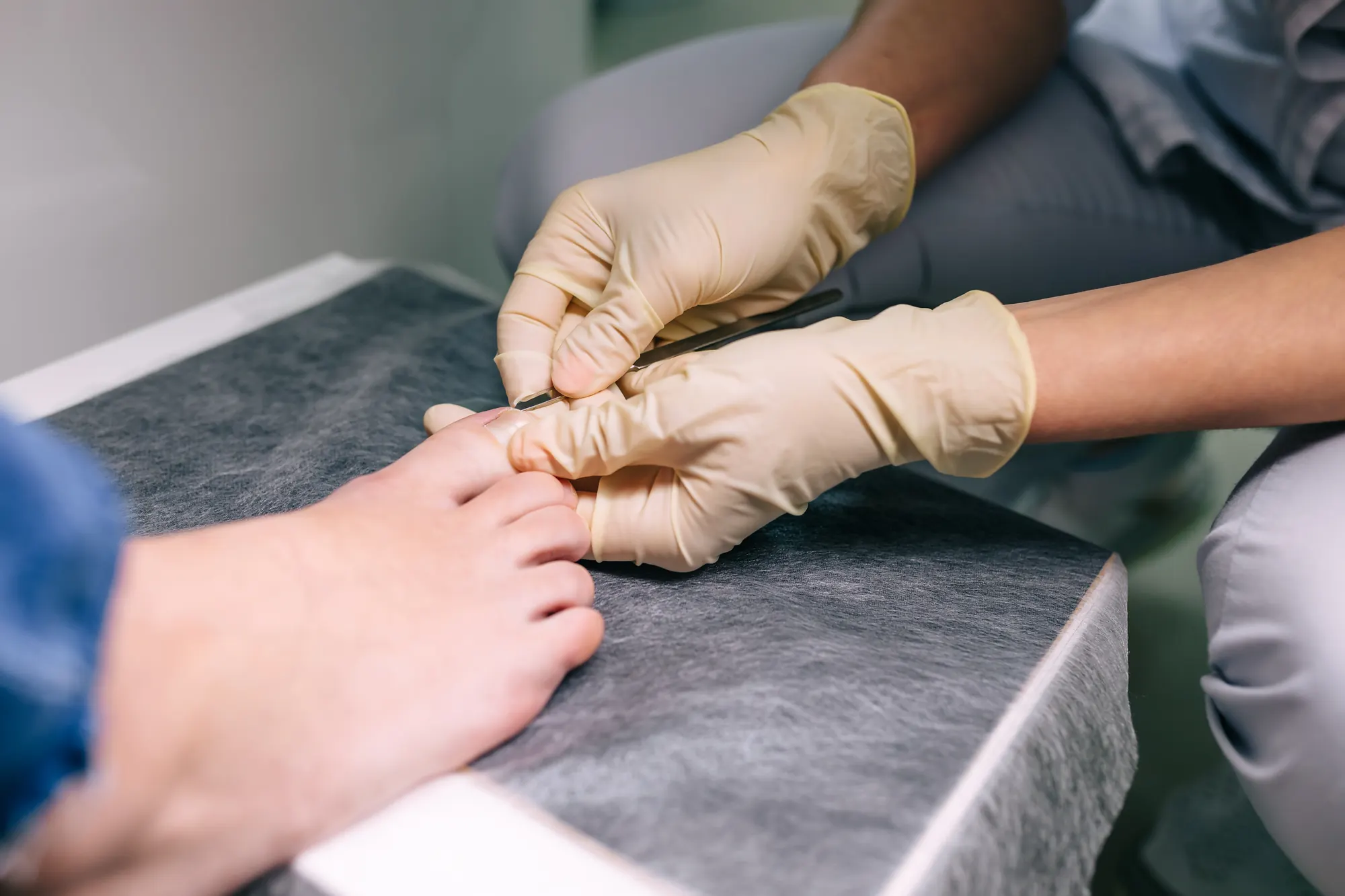
At a routine appointment we confirm what the rash is, clear away dead and cracked skin so treatment can work, check whether the nails are affected, and advise on the right product and how long to use it.
Foot conditions
Related conditions
- Corns and calluses Hard, thickened skin where shoes or walking put pressure on the foot.
- Cracked heels Dry, thick skin around the heels that splits and can bleed.
- Verruca A wart on the sole or toes, caused by a virus.
Podiatry
bottom of page